

Best Gaming PCs & Desktops (2026)
Last updated: June 2026 · As an Amazon Associate, UnknownGear earns from qualifying purchases. Full disclosure.
Buying a prebuilt gaming PC in 2026 is a contact sport. Every brand swears their box is "future-proof," every flagship has an RGB tax bolted to the side, and somewhere a marketing intern just typed the words "AI-powered cooling" with a straight face. My job is to translate all of that back into the only language that matters: how many frames you actually get per dollar before your wallet taps out.
I rank these by real-world performance-per-dollar, GPU tier (the part that actually decides your frames — the CPU mostly just keeps up), cooling that won't sound like a leaf blower, and how much you're overpaying for the logo on the glass panel. Budget builds get graded on "does it punch above its price," flagships get graded on "did they actually earn that price, or are you paying for the vibes." No sponsored glazing, no fake hype.
One money-saving trick: prebuilts are config-priced, not just spec-priced. The exact same chassis and GPU can swing $300-$600 depending on which CPU/RAM/storage bundle the retailer stapled on — and the most-advertised config is almost never the best value. Pull up two or three SKUs of the same model, ignore the one on the banner, and buy the one where you're not paying flagship money for a CPU you'll never max out. A slightly older or lower-clocked CPU paired with the GPU you actually wanted is free frames.
🆕 What's new this month (June 2026)
- RTX 50-series is now the floor, not the ceiling. Even sub-$1,000 boxes ship with 50-series silicon now (RTX 5050/5060-class), so the old "budget PC = last-gen GPU" rule is finally dead. If a 2026 prebuilt is still pushing 40-series at full price, that's a clearance shelf wearing a costume.
- The flagship tax got greedier. Top-end OMEN 45L and Aegis configs now flirt with serious flagship money once you check the big-storage, big-RAM boxes — most of which you do not need to hit a locked 1440p. Buy the GPU, not the spec sheet flex.
Quick comparison — the top of each tier
| Product | Best for | Key spec | Tier | Our pick |
|---|---|---|---|---|
| Alienware Aurora R16 | Brand-name flagship | RTX 50-series · Core i7/Ultra · 32GB DDR5 | Premium | 👑 Premium |
| Corsair ONE i500 | Tiny-but-terrifying | RTX 5070 · i9-14900F · dual liquid loop | Premium | 🏆 Best compact |
| Lenovo Legion Tower 5i Gen 10 | Smart mid-range | RTX 5070 · Ultra 7 265F · 32GB DDR5 | Mid-range | 🎯 Mid value |
| Skytech Storm | Frames-per-dollar | RTX 5060 Ti · Ryzen 7 · 32GB | Budget | 💸 Budget hero |
| Skytech Nebula | First real rig | RTX 5050/4060 · Ryzen 5 · 650W Gold | Entry | 🪙 Entry pick |
👑 Premium — the "my teammates can hear me flex" tier
These are the rigs that run everything maxed and look smug doing it. You're paying for headroom, cooling, and yes, a little bit of logo.
Alienware Aurora R16 — the redemption arc
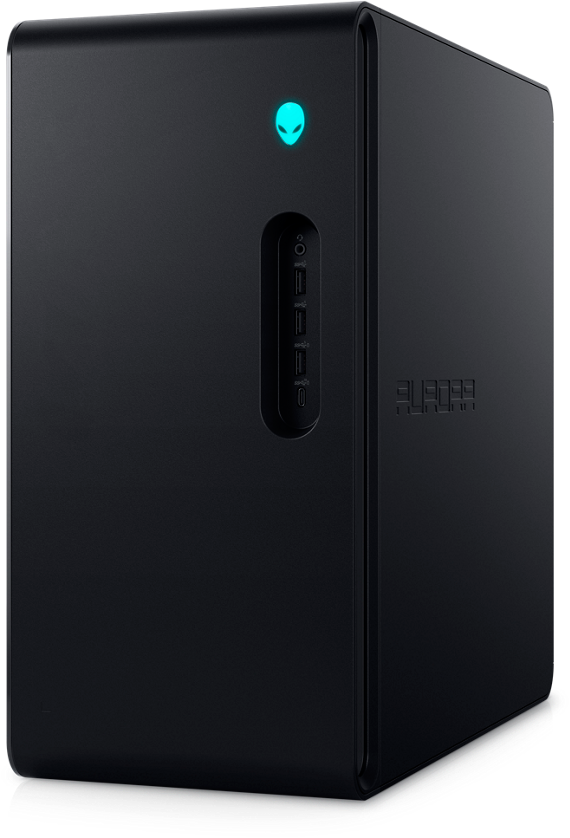
The pitch: The spaceship-looking flagship that finally stopped suffocating its own hardware — for people who want a name-brand box that just works.
The rundown: Old Aurora cases used to cook their components like they had a personal grudge against airflow, but the R16 ditched the cramped curvy chassis for a sane, tool-less box that actually breathes. Inside you get Intel Core i7 / Ultra-class silicon, RTX 50-series graphics, 32GB of DDR5, and a 1TB-plus NVMe SSD — paired with Dell's genuinely solid warranty and support, which is the part you don't appreciate until something dies at 2am. It's not the cheapest way to get these frames, and you're absolutely paying a slice of Alienware tax, but the thing is reliable, quiet, and stops looking like a thermal hazard. Redemption arc complete.
Specs: Intel Core i7 / Core Ultra · RTX 50-series · 32GB DDR5 · 1TB+ NVMe SSD · tool-less chassis · Windows 11 · Premium tier
Verdict: ✅ great support, real cooling now, clean upgrades · ❌ brand tax, you can build cheaper · 👉 For the player who wants a flagship that just works and never wants to touch a screwdriver.
HP OMEN 45L — the chimney with the cryo gimmick
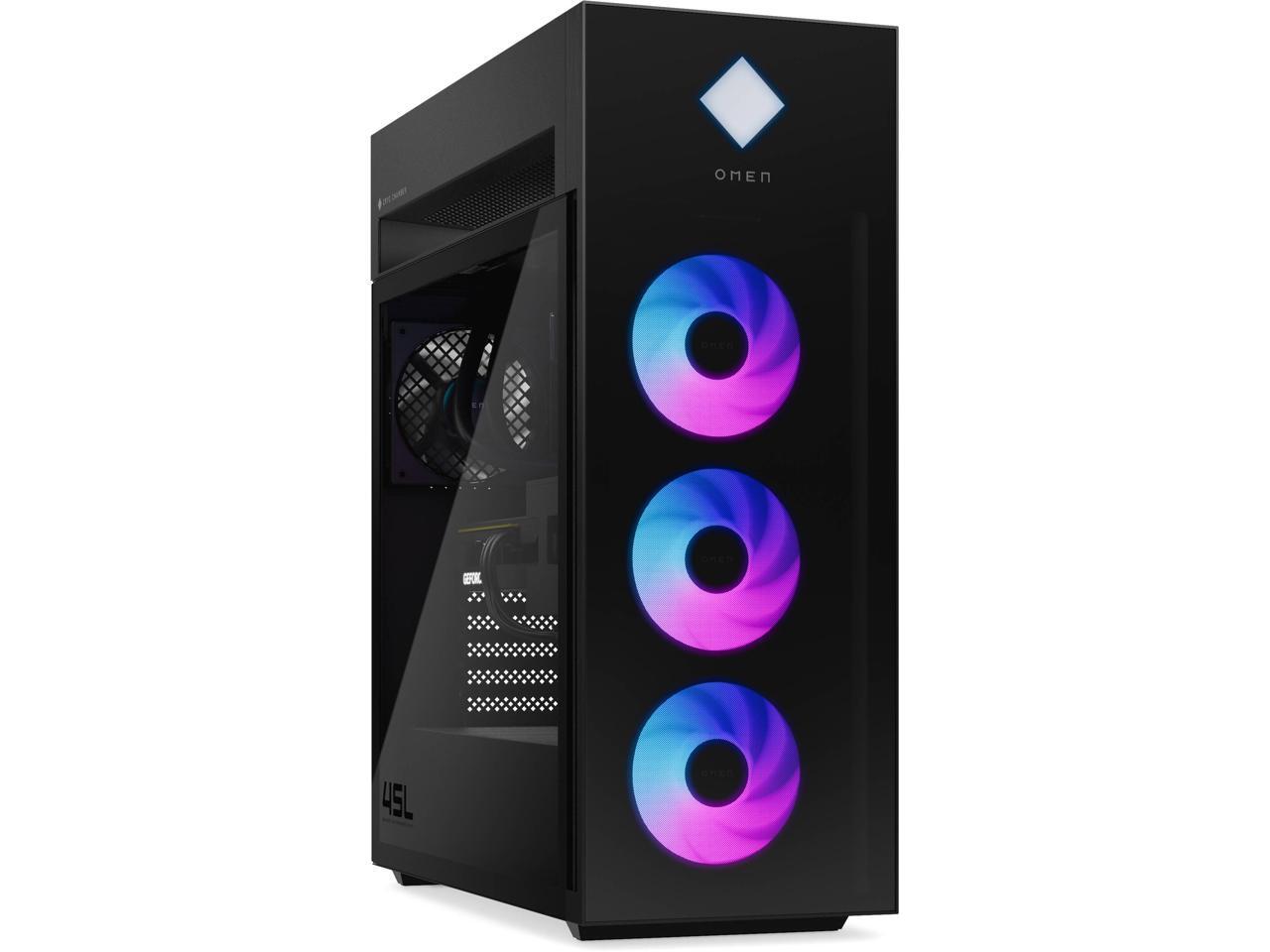
The pitch: A big, glassy tower with a literal cooling chamber up top — for people who want max GPU and refuse to thermal-throttle.
The rundown: The OMEN 45L's party trick is the CRYO CHAMBER, which moves the AIO radiator into its own ventilated compartment so the rest of your hot components aren't breathing each other's exhaust — and unlike most "innovative cooling" marketing, this one actually does something. Configs run up to Intel Core Ultra 7/9, RTX 5070/5070 Ti graphics, DDR5, and a 1TB NVMe, all wrapped in a full-metal frame with toolless entry and four RGB zones so you can color-coordinate your bad decisions. The catch: HP loves to upsell you into stratospheric configs, so a fully loaded 45L can sail past flagship money fast. Buy the GPU tier you want, leave the 128GB-RAM cosplay on the shelf.
Specs: Intel Core Ultra 7/9 · RTX 5070 / 5070 Ti · 16-32GB DDR5 · 1TB+ NVMe · CRYO CHAMBER AIO · toolless 4-zone RGB · Premium tier
Verdict: ✅ genuinely good cooling, premium build, easy access · ❌ config creep gets expensive, base RAM stingy · 👉 For the streamer who wants a clean flagship and will keep it for years.
MSI Aegis RS2 AI — the spec-sheet bully
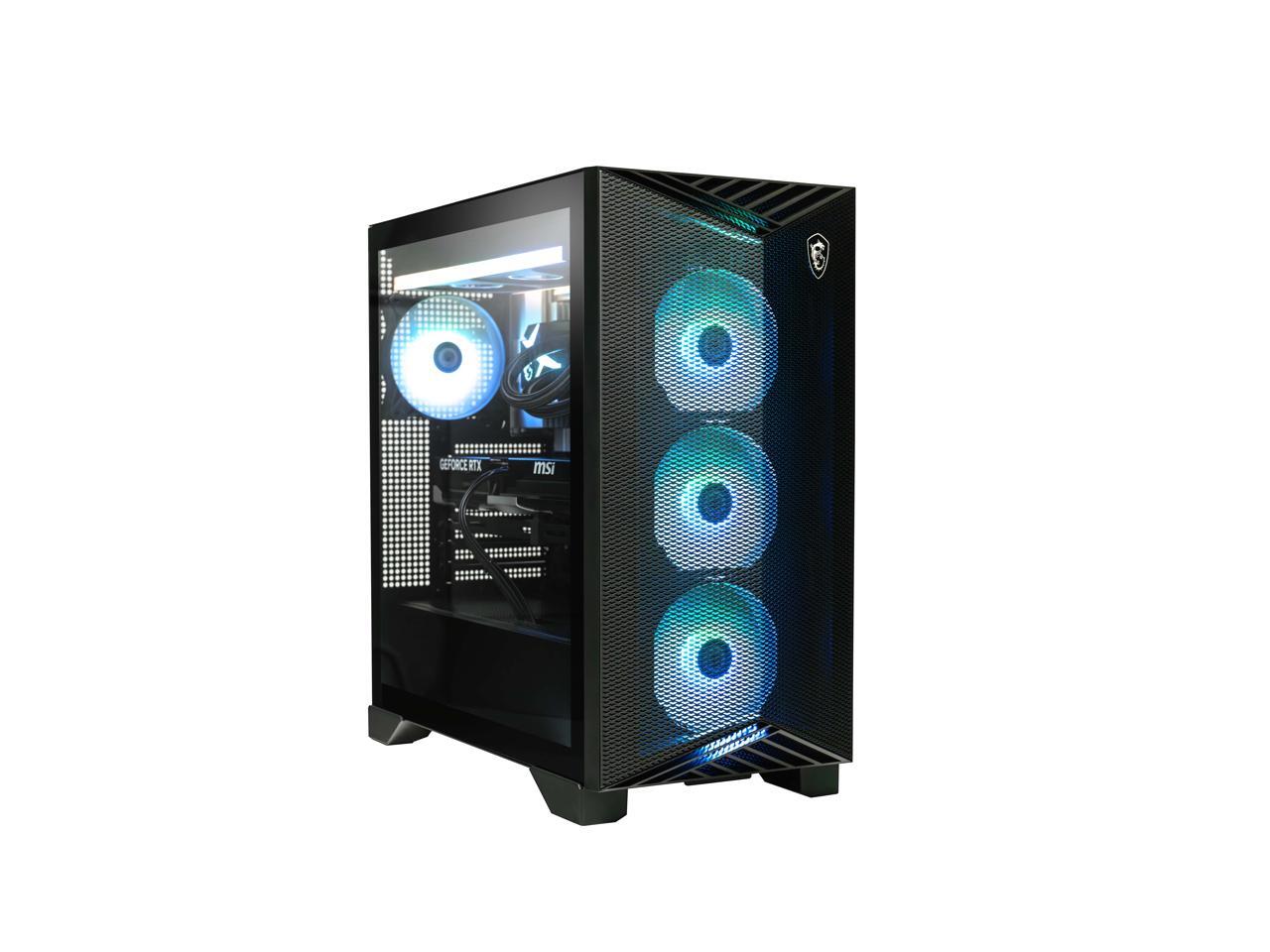
The pitch: Real MSI parts, real liquid cooling, real Wi-Fi 7 — for the player who wants top-tier internals without the boutique markup.
The rundown: The Aegis RS2 AI skips the mystery-meat components a lot of prebuilts hide inside and stuffs the case with actual MSI hardware: a 360mm RGB AIO, a GUNGNIR-style airflow case, a quality 80+ Gold PSU, and Wi-Fi 7 so your ping has zero excuses. Configs climb from Core Ultra 7 265K + RTX 5070 up to a Core Ultra 9 285K with an RTX 5070 Ti, 32GB DDR5, and a 2TB Gen4 SSD — basically a "we maxed the parts list" build. The "AI" branding is, as always, mostly a sticker, but the engineering underneath is legit. It's priced like a flagship because it performs like one; just don't pay extra expecting Skynet.
Specs: Intel Core Ultra 7 265K / Ultra 9 285K · RTX 5070 / 5070 Ti · 32GB DDR5 · 2TB Gen4 NVMe · 360mm AIO · Wi-Fi 7 · Premium tier
Verdict: ✅ legit MSI internals, great cooling, Wi-Fi 7 · ❌ "AI" name is fluff, pricey at the top · 👉 For the buyer who wants flagship parts they could actually upgrade later.
Corsair ONE i500 — the tiny box that bullies full towers

The pitch: Flagship horsepower crammed into a chassis smaller than your mid-tower — engineering flex energy, premium price.
The rundown: The ONE i500 is what happens when engineers get told "make it tiny and make it fast, and I don't care how hard that is." It runs an Intel Core i9-14900F and an RTX 5070 through a dual liquid-cooling loop inside a ~12-liter case that has no business being this quiet or this cool. It even comes in tasteful wood-finish panels, so it reads as "design object on a desk" rather than "RGB gamer altar." The downside is the same as every small-form-factor unicorn: you pay a steep premium for the miniaturization, and you're not cramming a future GPU upgrade into this thing without a shoehorn and a prayer. But if desk space is sacred, nothing else looks or performs like it.
Specs: Intel Core i9-14900F · RTX 5070 · 32GB DDR5 · 1TB M.2 SSD · dual liquid cooling · ~12L SFF chassis · Premium tier
Verdict: ✅ stunning compact build, quiet, gorgeous · ❌ premium price, limited upgrade path · 👉 For the player who wants flagship frames without a fridge-sized tower.
ASUS ROG Strix G16 (2025) — the desktop-killer in a backpack
The pitch: Not technically a desktop, but it'll clap one — for people who need their frames to follow them to LAN.
The rundown: Sometimes the best "gaming PC" is the one you can shove in a bag, and the 2025 Strix G16 is the flex pick here. The redesigned chassis ditches the old gamer-y seams for something genuinely sleek, with a full-surround RGB lightbar across the bottom for that "I have a personality" glow. Inside it's no joke: up to Intel Core Ultra 9, RTX 50-series laptop graphics (up to a 5080), a fast 16-inch high-refresh Nebula display, and a serious cooling stack — end-to-end vapor chamber, tri-fan setup, and liquid metal on the CPU. Tool-less access means you can actually upgrade the RAM and SSD without a YouTube tutorial and a meltdown. You pay laptop-premium for the portability, but it's a desktop's worth of frames that fits on a tray table.
Specs: Intel Core Ultra 9 · RTX 50-series Laptop (up to 5080) · 16" 240Hz Nebula display · 32GB DDR5 · vapor chamber + liquid metal · Premium tier
Verdict: ✅ portable, great display, strong cooling · ❌ laptop-tax, fixed-ish GPU · 👉 For the player who games at home AND drags their rig to friends' places.
🎯 Mid-range — the "smart money lives here" tier
This is the sweet spot where you stop paying for the badge and start paying for frames. Most people should buy from this tier and put the leftover cash toward a better monitor.
Lenovo Legion Tower 5i Gen 10 — the grown-up's value pick
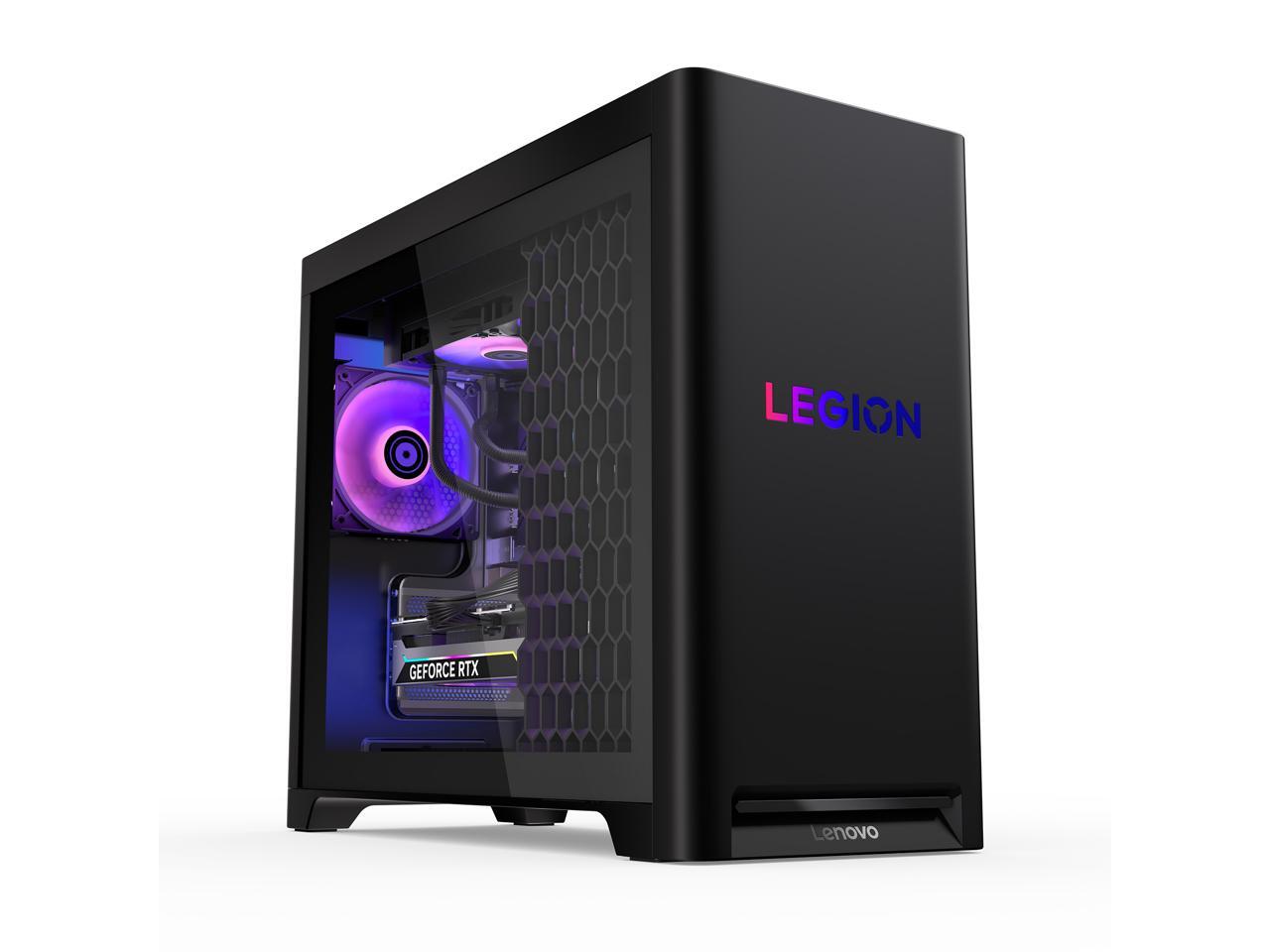
The pitch: Clean build, real cooling, sane price — the prebuilt I'd recommend to someone who hates being upsold.
The rundown: The Legion Tower 5i Gen 10 is the "no nonsense" champ. It runs an Intel Core Ultra 7 265F, an RTX 5070, 32GB of DDR5-5600, and a 1TB NVMe through a transparent Eclipse Black panel that pops open with thumbscrews — Lenovo actually wants you to upgrade this thing, which is refreshingly not evil. There's a 240mm liquid cooler keeping the CPU honest, a beefy 850W PSU with real headroom for a future GPU swap, and a build quality that punches above the price. It's not flashy and it won't win an RGB beauty pageant, but it delivers locked 1440p frames without making your bank account file a complaint. This is the one I point normal humans toward.
Specs: Intel Core Ultra 7 265F · RTX 5070 12GB · 32GB DDR5-5600 · 1TB NVMe SSD · 240mm liquid cooler · 850W PSU · Mid-range tier
Verdict: ✅ great value, easy upgrades, roomy PSU · ❌ plain looks, stock often tight · 👉 For the buyer who wants strong 1440p without paying the flagship tax.
Skytech Prism 4 — the boutique build at chain-store prices
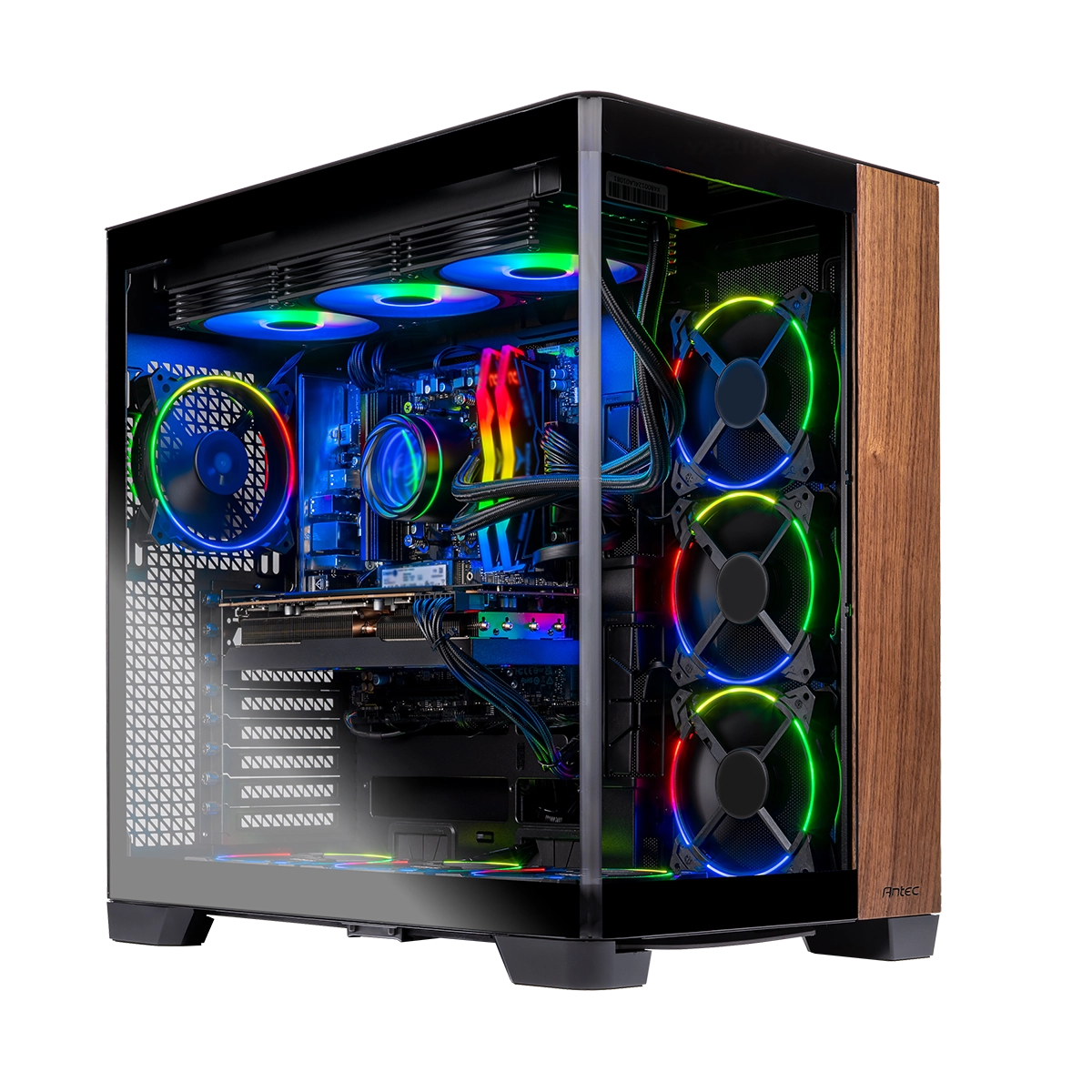
The pitch: An X3D gaming CPU plus a 5070 Ti in a glass airflow case — custom-build vibes without learning what a standoff screw is.
The rundown: Skytech's Prism 4 is for the player who wanted to build their own rig, watched three hours of cable-management tutorials, and then noped out. You get an AMD Ryzen X3D-class gaming chip (the 3D V-Cache stuff that genuinely wins in games), an RTX 5070 Ti 16GB, 32GB of fast DDR5-6000, and a 2TB Gen4 NVMe, all assembled and stress-tested in a clean tempered-glass airflow case with tasteful RGB. Because it's a US system integrator and not a megabrand, you're not paying a giant logo tax — the money goes into the actual parts. Support is more "small company" than "24/7 megacorp," but the frames-per-dollar here genuinely embarrasses some flagships.
Specs: AMD Ryzen 7 X3D-class · RTX 5070 Ti 16GB · 32GB DDR5-6000 · 2TB Gen4 NVMe · tempered-glass airflow case · Mid-range tier
Verdict: ✅ great value, gaming-optimized X3D CPU, clean build · ❌ smaller-brand support, config-dependent price · 👉 For the player who wants near-custom performance without building it.
💸 Budget — the "stop getting clapped on integrated graphics" tier
These won't max ray tracing at 4K, and that's fine — they get you real, current-gen frames without remortgaging anything. Perfect first rigs.
Skytech Storm — the frames-per-dollar bruiser
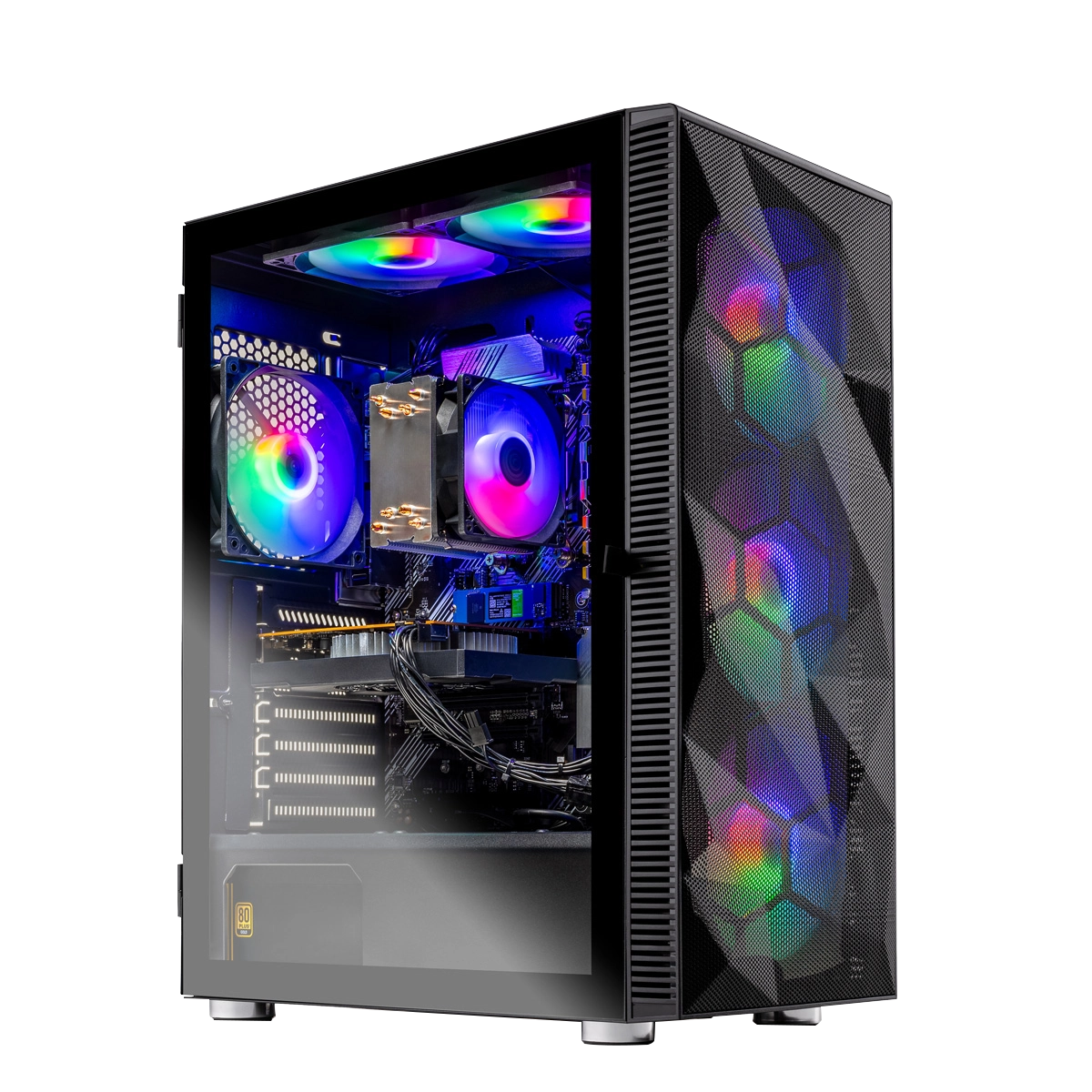
The pitch: Current-gen GPU, real airflow case, no clearance-shelf parts — the value king of the budget bracket.
The rundown: The Storm is where the "budget = old GPU" myth goes to die. It pairs an AMD Ryzen 7 (7700-class on the better configs) with an RTX 5060 Ti 8GB, 32GB of DDR5-6000 on the good SKUs, a 1TB NVMe, and a quality 650W Gold PSU — all inside a Montech airflow case that doesn't bottleneck the parts with hot-box thermals. That's a genuinely capable 1080p-ultra / 1440p-high machine for the kind of money people used to spend on a webcam and a dream. It's not going to chew through 4K ray tracing, but it'll hold a buttery competitive frame rate so your excuses go back to being entirely about your aim. Best value on this whole list.
Specs: AMD Ryzen 7 7700 · RTX 5060 Ti 8GB · 32GB DDR5-6000 · 1TB NVMe SSD · 650W Gold PSU · Wi-Fi · Budget tier
Verdict: ✅ current-gen GPU, great value, real cooling · ❌ 8GB VRAM is the ceiling, DDR4 on cheaper configs · 👉 For the competitive player who wants high frames per dollar, full stop.
CyberPowerPC Gamer Xtreme — the everywhere-available default
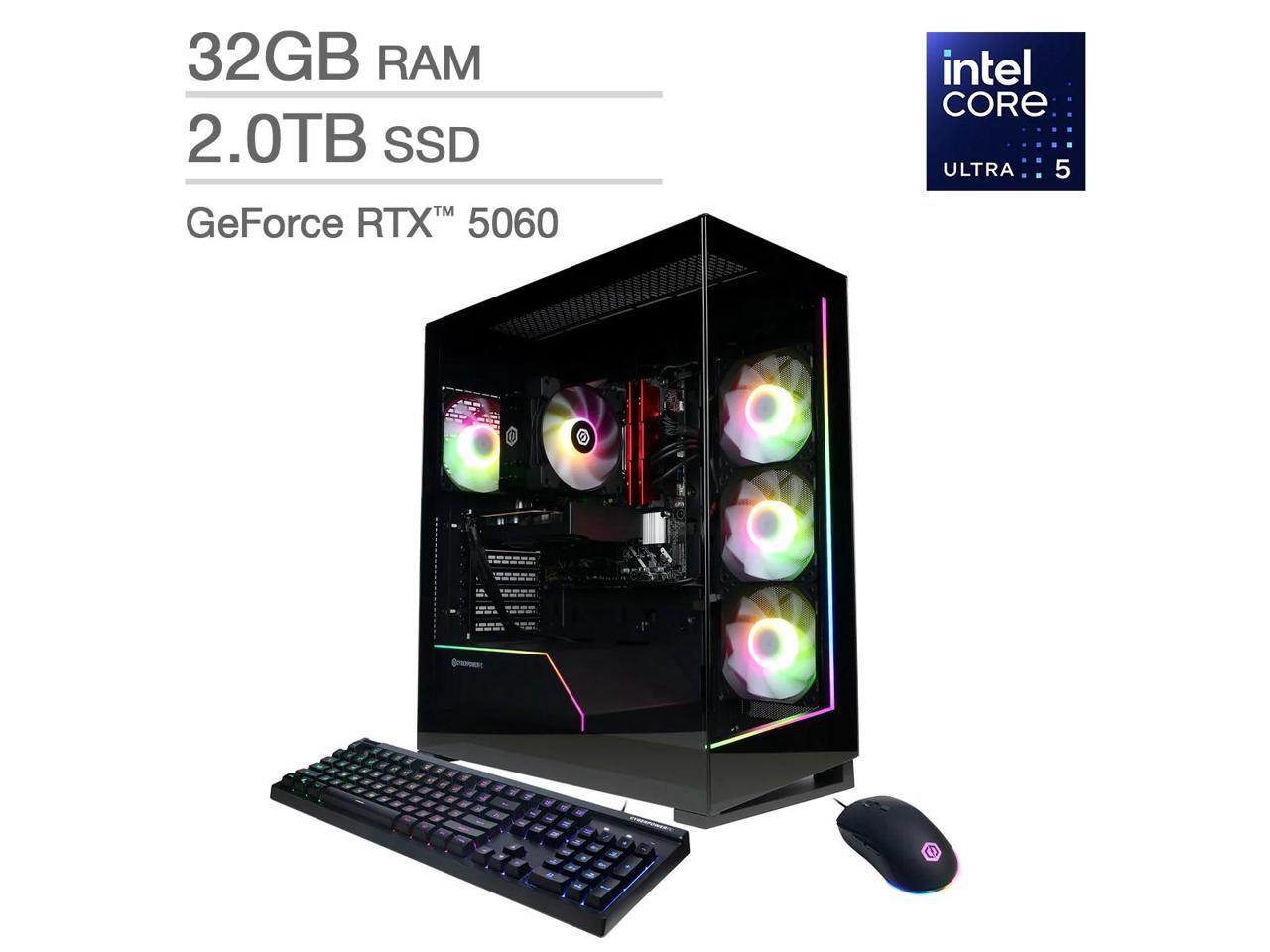
The pitch: The prebuilt you can buy literally anywhere, often on sale — solid current-gen value when the price is right.
The rundown: The Gamer Xtreme is the prebuilt equivalent of a reliable mid-lane pick — never the flashiest, always available, frequently discounted. Configs run an Intel Core Ultra 5 225F with an RTX 5060 (8GB), 32GB of fast DDR5-6400, and a generous 2TB PCIe 4.0 SSD, which is a lot of storage for the money. It does the budget-prebuilt things you'd expect: a tempered-glass RGB case, Wi-Fi, and an honest 1080p-ultra / 1440p-capable punch. CyberPower's value lives and dies on the current discount, so check the live price before you commit — catch it discounted and the frames-per-dollar gets genuinely tasty. Watch the PSU and case airflow on the cheapest configs, but the core SKUs hold up.
Specs: Intel Core Ultra 5 225F · RTX 5060 8GB · 32GB DDR5-6400 · 2TB PCIe 4.0 NVMe · tempered-glass RGB case · Wi-Fi · Budget tier
Verdict: ✅ widely available, tons of storage, frequent sales · ❌ value depends on discount, basic cooling · 👉 For the deal-hunter who wants a solid current-gen box on sale.
Skytech Nebula — the "your first real PC" pick
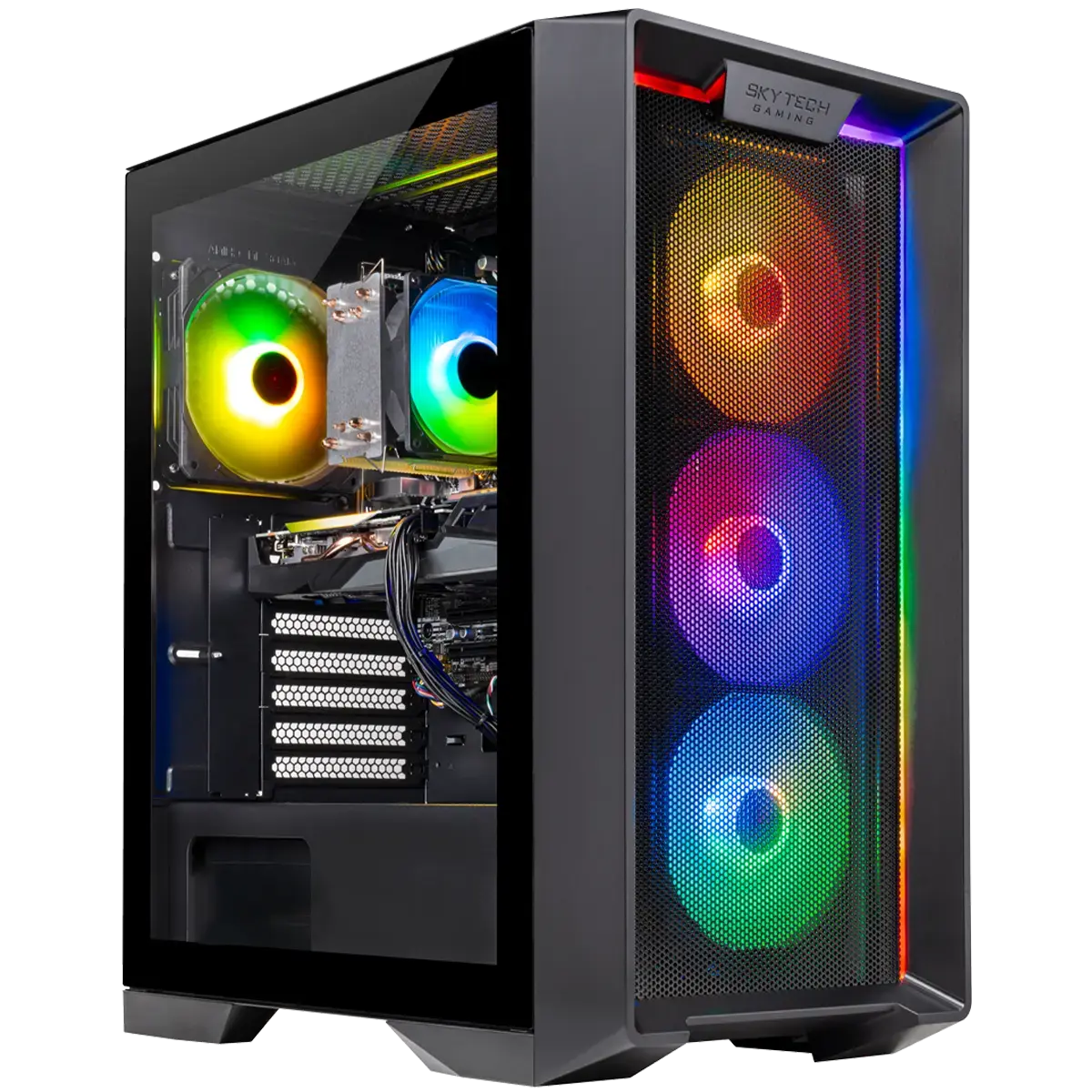
The pitch: An entry-tier box with a current-gen GPU and a real Gold PSU — the cleanest on-ramp into actual PC gaming.
The rundown: The Nebula is the entry-level pick that doesn't feel like a punishment. It runs an AMD Ryzen 5 5500, a current-gen RTX 5050 (8GB) or RTX 4060 depending on the config, 16GB of DDR4, a 1TB NVMe, and — crucially — a legit 650W Gold PSU instead of the sketchy no-name brick budget builds love to hide inside. That PSU matters: it means you can drop a bigger GPU in later without the whole thing browning out. It's a 1080p machine through and through, but it'll run modern titles at high settings and finally get you off integrated graphics and out of the "why is my game a slideshow" arc. Assembled and tested in the US, with a clean compact case that won't embarrass your desk.
Specs: AMD Ryzen 5 5500 · RTX 5050 8GB / RTX 4060 · 16GB DDR4 · 1TB NVMe SSD · 650W Gold PSU · Wi-Fi · Entry tier
Verdict: ✅ real Gold PSU, current-gen GPU, entry-tier price · ❌ 16GB DDR4, 1080p ceiling · 👉 For the first-timer who wants a clean, upgrade-friendly entry rig.
The bottom line
- Best overall value: Lenovo Legion Tower 5i Gen 10 — strong 1440p, easy upgrades, no flagship tax.
- Best budget rig: Skytech Storm — current-gen frames-per-dollar that embarrasses pricier boxes.
- Best first PC: Skytech Nebula — real Gold PSU, current-gen GPU, upgrade-ready.
- Best compact flagship: Corsair ONE i500 — desktop power that fits where a mid-tower can't.
- Best name-brand flagship: Alienware Aurora R16 — reliable, well-cooled, great support.
- Best cooling: HP OMEN 45L — the CRYO CHAMBER actually earns its marketing.
- Best for LAN / portability: ASUS ROG Strix G16 (2025) — a desktop's frames in a backpack.
Frequently asked questions
Is a prebuilt gaming PC worth it in 2026, or should I build my own?
If you enjoy the process and chase every last dollar of value, building wins. But in 2026, prebuilt margins have tightened and big retailers run aggressive sales, so a well-chosen prebuilt (especially from a system integrator like Skytech) is often within a hair of DIY pricing — with a warranty and zero "why won't it POST" panic. For most people, a smart prebuilt is the right call.
What GPU do I actually need for 1080p, 1440p, and 4K?
For 1080p high-refresh, an RTX 5050/5060-class card is plenty. For 1440p ultra, aim for an RTX 5070 or 5070 Ti. For real 4K with ray tracing, you want 5070 Ti and up. The GPU decides your frames far more than the CPU, so prioritize it — pairing a great GPU with a midrange CPU is almost always the smarter spend.
How much RAM and storage should a 2026 gaming PC have?
32GB of DDR5 is the comfortable sweet spot for gaming plus a browser graveyard and Discord. 16GB still works for pure gaming but is the bare minimum now. For storage, a 1TB NVMe SSD is the floor — modern games are obese, so 2TB is the smarter buy if it's only a small upcharge.
Why are the same prebuilt models priced so differently?
Because prebuilts are sold as bundled configs, not just specs. The same chassis and GPU can swing hundreds of dollars based on the CPU, RAM, and storage the retailer pairs with it — and the most-advertised config usually isn't the best value. Compare a few SKUs of the same model and buy the one that doesn't overpay for a CPU you'll never max out.
Do I need liquid cooling, or is air fine?
For mid-range builds, a good air cooler is totally fine and quieter to live with. Liquid cooling (an AIO) earns its keep on high-end CPUs that run hot, in compact cases with limited airflow, or if you just want lower noise under load. It's not a requirement for great gaming performance — don't pay a premium for it on a budget box that doesn't need it.
Related: Best Gaming Headsets · Best Gaming Mice